
Pompeii's Ancient Fast Food Restaurants
Pompeii's Ancient Fast Food Restaurants
Americans love their McDonald’s fries and Chick-fil-A nuggets, but did you know the Ancient Romans loved their fast food too?
Fast food restaurants were as prolific in Ancient Rome as they are in America today! This is evident as seen in the ancient ruins of Pompeii as well as other ancient cities of Rome.
A trip to Pompeii should be on everyone’s bucket list. Pompeii is preserved just how it was on the day of its destruction on August 24, 79 AD, when Mount Vesuvius erupted, devastating the city. Almost immediately, a thick layer of volcanic ash and pumice buried the city, trapping its people and preserving their final moments. As the layers of ash are today excavated, we can witness exactly what life was like for these Ancient Romans.
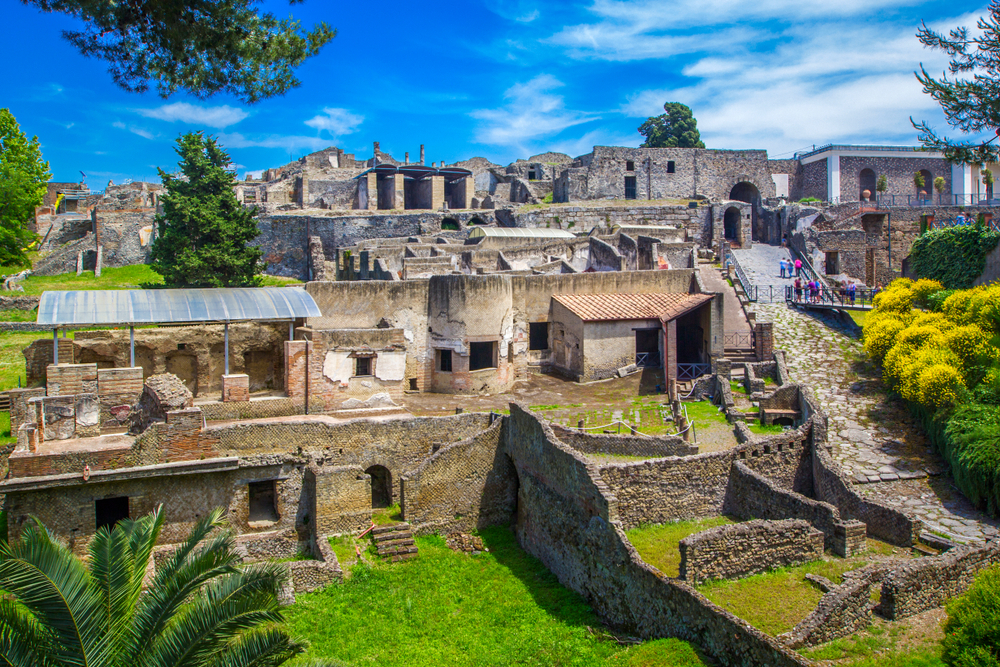
Within Pompeii are preserved the public spaces of the town such as the forum with temples, government buildings and markets, the entertainment area with almost perfectly preserved amphitheaters and bathhouses and residential/commercial areas.
Most Pompeiians lived in one family, single-storied “row-houses” completely “sealed off” from the urban surroundings, except for a door onto the main street. The homes were inward-facing structures built around a central, open-roofed courtyard called an atrium, designed for privacy and security. The interior of the home would include several rooms all centralized around the atrium with living rooms and bedrooms, but most lacked kitchens. Dedicated kitchen areas were generally found only in the larger houses of the wealthy and the lower classes who lived in apartment buildings (insulae) lacked them entirely.
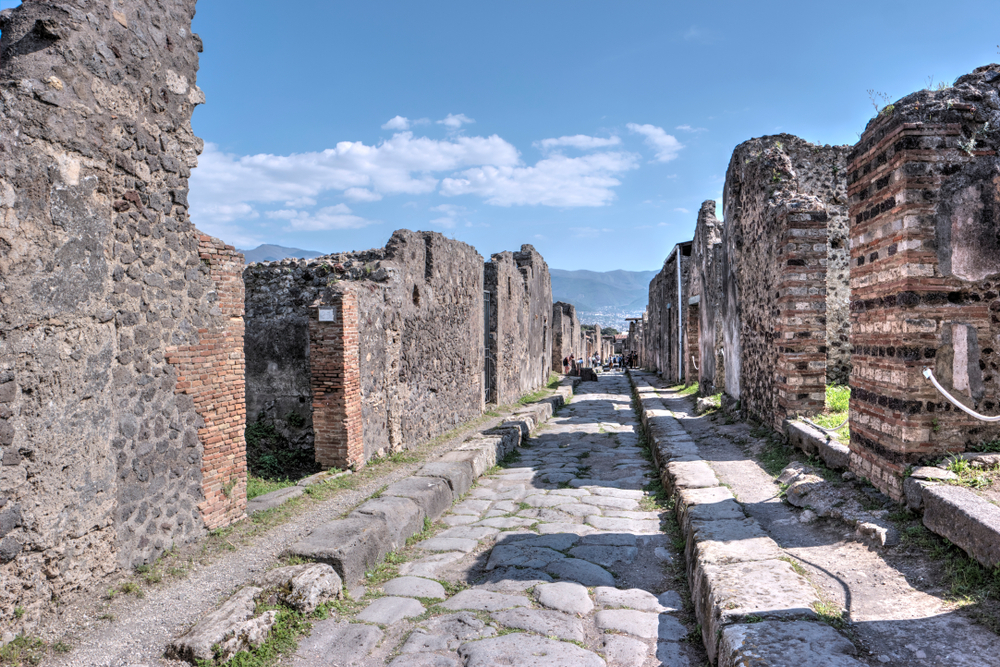
Opening directly onto the street in front of the door of each house were often two shops (tabernae) which were either run by the family owning the house or rented out for additional income. While some of these shops were operated by craftsmen and shopkeepers, the majority of these tabernae were taverns (caponae) and fast-food stalls (thermopolia).
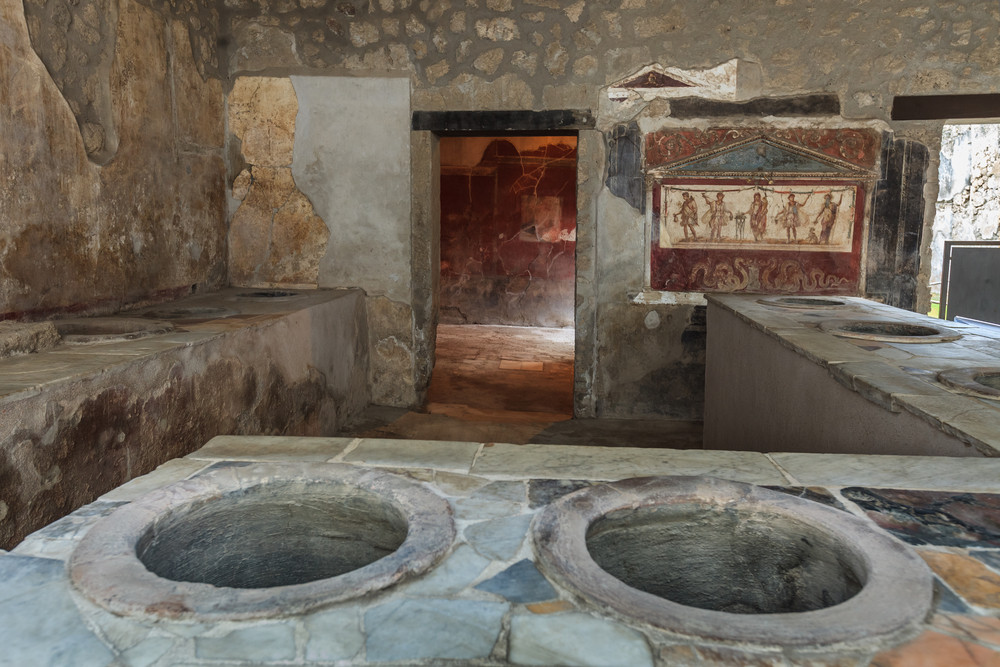
Upon visiting Pompeii for the first time and wandering down the streets, I was perplexed by what appeared to be large countertops pierced atop with large holes. I was quite surprised to realize that these were in fact take-away restaurants. They were everywhere. I believe over 150 of these stalls have been excavated thus far.
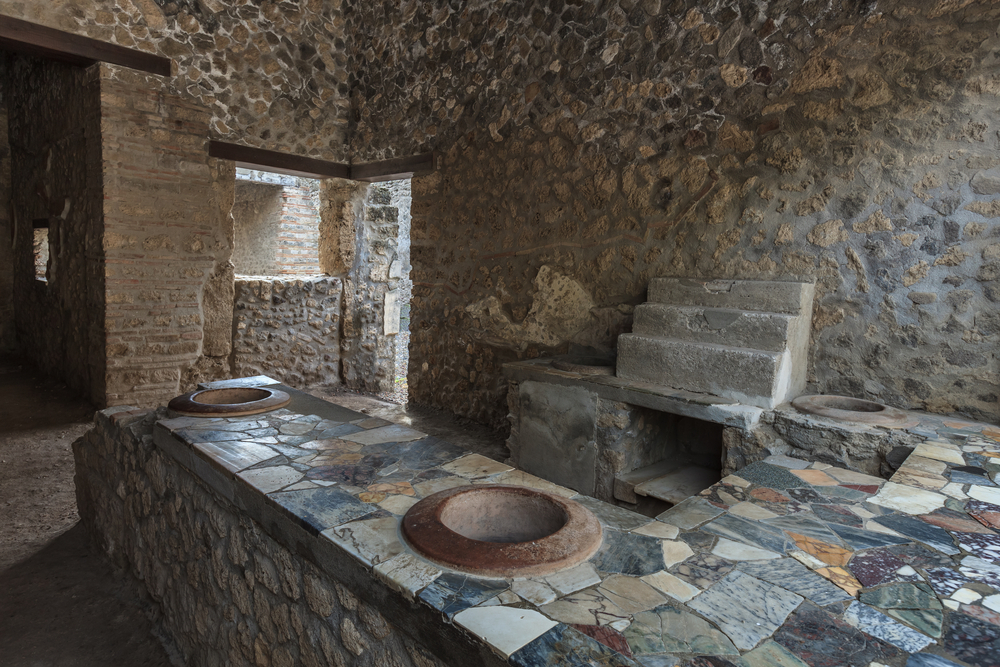
Since most locals lacked kitchens in their homes, or lived in small, crowded apartments that contained no cooking facilities, people in Pompeii frequently ate out, or bought takeaway. All over the city, the people patronized the many snack bars that provided quick, affordable, and ready-to-eat meals.
The holes in those countertops, which I mentioned above, would hold deep terracotta jars, known as dolia, which were used to store and keep warm food and drinks for customers on the go. Typical ready-to-eat foods available at these stalls would include stews, roasted meats (duck, goat, pork), fish, lentils, beans, and baked cheese, along with drinks of mulled wine, spiced wine, or wine mixed with honey and hot water to wash it all down.
The reliance on these commercial food outlets indicates that eating out was a common practice in Ancient Pompeii and was typical of Ancient Roman culture. Sounds like today. Surprising that the Romans who were uber innovators didn’t create their own delivery service like GrubHub or DoorDash!
Newest Guide & Blog Updates

What? There Were No Tomatoes in Italy.
What? There were no tomatoes in Italy. Imagine that you have time traveled back to Italy to the year...
Pompeii's Ancient Fast Food Restaurants
Pompeii's Ancient Fast Food Restaurants Americans love their McDonald’s fries and Chick-fil-A nugget...

Mamertino - Julius Caesar's Favorite Wine
Mamertino - Julius Caesar's Favorite Wine Tradition states that Julius Caesar claimed that Mamertino...
The Cave of Saint Michael in Monte Sant'Angelo
The Cave of Saint Michael in Monte Sant'Angelo A short drive (15 miles) from Padre Pio's Shrine in S...

"Emily in Rome" – Sylvie, Princess Jane: You Can’t Wear That in An Italian Church!
"Emily in Rome" – Sylvie, Princess Jane: You Can’t Wear That in An Italian Church! Every Italophilia...

And God Made the Sicilians…….
And God Made the Sicilians……. I just finished watching a very cute show on Netflix - Sicilia Expres...