
What? There Were No Tomatoes in Italy.

What? There were no tomatoes in Italy.
Imagine that you have time traveled back to Italy to the year 1425. After such a stressful trip, you are absolutely famished. You crave a big bowl of homemade Italian pasta covered in fresh tomato sauce or a pizza covered in Margherita tomato sauce with fresh mozzarella. You decide to enter the first establishment that you see and satisfy this crazing.
You sit down and inquire as to what is on the menu. There is pasta but it is served with either sweet and savory, spiced sauces or cheese. And there is something like pizza, but it is called panis focacius and is what we would refer to as focaccia or flatbread topped with olive oil and herbs. When you inquire as to the availability of any dishes with tomato sauce, the server looks at you with a puzzling glance.

Up until 1492, people in Medieval Europe were not aware of the tomato. It is thanks to Christopher Columbus and the Columbian Exchange that the tomato was imported into Europe. Native to South America, tomatoes were cultivated in Mexico by the Aztecs. Upon discovering this New World, Columbus and other Spanish Conquistadores began transporting back to Europe all kind of exotic goods. This was known as the Columbia Exchange. The Spanish introduced horses, cattle, pigs, sheep, chickens, wheat, sugar cane, rice, coffee, grapes, bananas, and citrus fruits to the New World and the New World provided Europe with newfound commodities, such as corn (maize), potatoes, sweet potatoes, beans, cacao (chocolate), vanilla, peanuts, pineapples, chili peppers and tomatoes.
At first Europeans, particularly in Italy and Britain, considered tomatoes poisonous, as they belonged to the nightshade family, which were extremely toxic plants. Plants such as tomatoes and eggplants were suspected of being poisonous because they belong to this same botanical family (Solanaceae) though as we know tomatoes were not poisonous.
Until about the 16th century, tomatoes were grown primarily as exotic ornamental garden plants rather than food. Southern Italy proved be to ideal climate to grow tomatoes. The Mediterranean climate and local volcanic soil in areas around Campania and Sicily allowed tomato crops to flourish. This area of Italy was extremely poor and meat was scarce. Italian peasants discovered the tomato not to be poisonous and discovered it was inexpensive and easy to grow and provided an abundance of food.
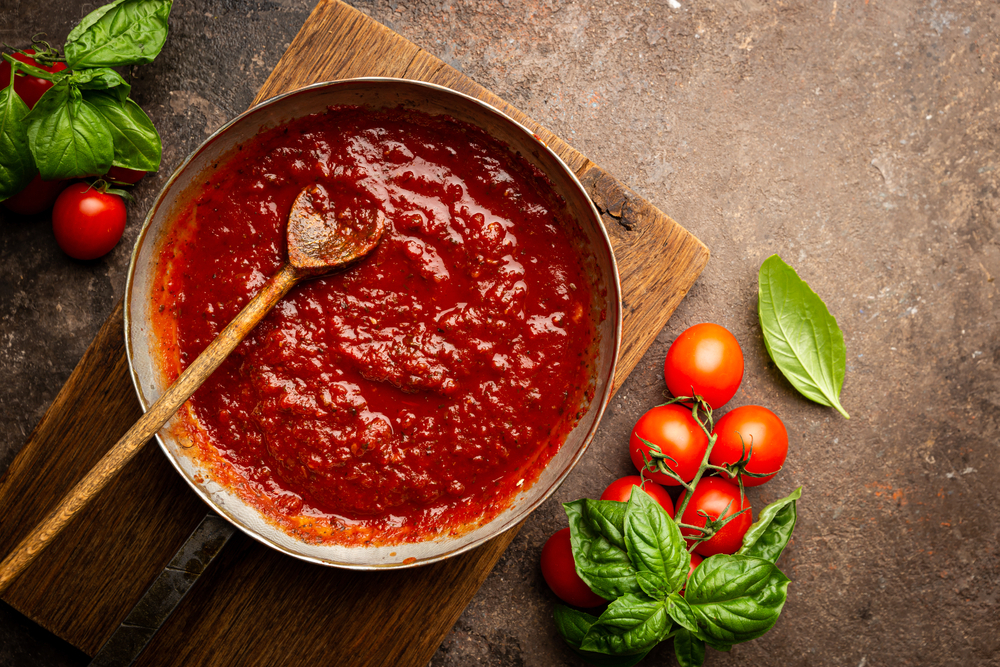
The earliest surviving recipe for tomato sauce appeared in a cookbook entitles, Lo scalco alla moderna "the Modern Steward", written in 1692 by Antonio Latini, who was a Cardinal and nephew of Pope Urban VIII. Soon the recipe for tomato sauce spread through Italy with each region adding their own twist on the standard recipe. By the 19th century, it was a staple on all Italian tables.
And thank goodness! Because who does not love Italian tomato sauce!!!
Newest Guide & Blog Updates

What? There Were No Tomatoes in Italy.
What? There were no tomatoes in Italy. Imagine that you have time traveled back to Italy to the year...

Pompeii's Ancient Fast Food Restaurants
Pompeii's Ancient Fast Food Restaurants Americans love their McDonald’s fries and Chick-fil-A nugget...

Mamertino - Julius Caesar's Favorite Wine
Mamertino - Julius Caesar's Favorite Wine Tradition states that Julius Caesar claimed that Mamertino...

The Cave of Saint Michael in Monte Sant'Angelo
The Cave of Saint Michael in Monte Sant'Angelo A short drive (15 miles) from Padre Pio's Shrine in S...

"Emily in Rome" – Sylvie, Princess Jane: You Can’t Wear That in An Italian Church!
"Emily in Rome" – Sylvie, Princess Jane: You Can’t Wear That in An Italian Church! Every Italophilia...

And God Made the Sicilians…….
And God Made the Sicilians……. I just finished watching a very cute show on Netflix - Sicilia Expres...