
History of the Raffaellesco Deruta Pattern
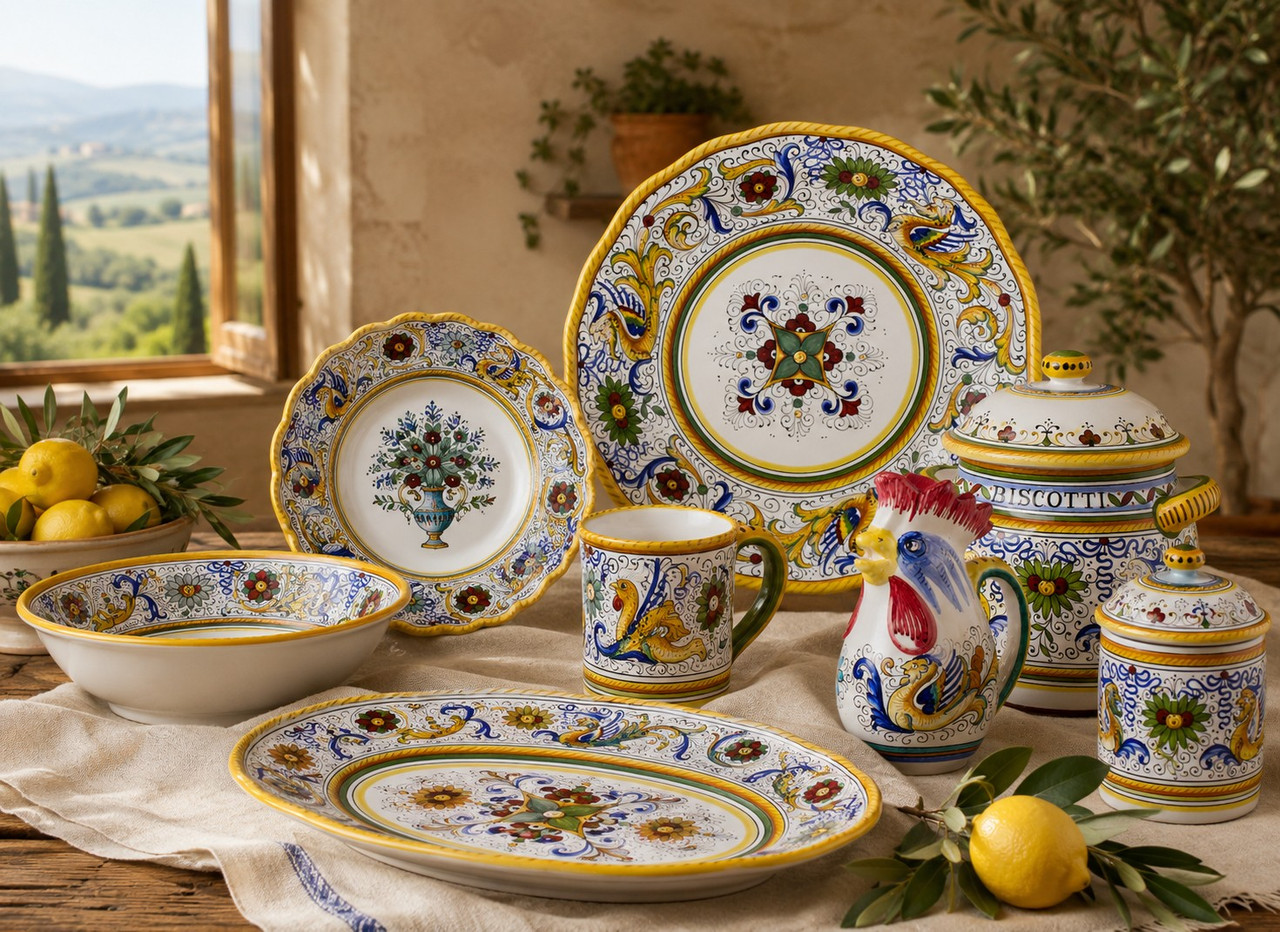
The Raffaellesco pattern, renowned for its central motif of the benevolent dragon, surrounded by intricate floral arabesques in a bright color palette of yellow, blue and green, is one of the most famous and enduring styles of Italian Deruta ceramics. Originating in the 16th-century, the Raffaellesco decoration takes its name and inspiration from the “grotesque” style of the famous Renaissance painter Raffaello Sanzio, otherwise known as Raphael.
In Italian “grotesque” is defined as grotto or cave and that is where our story begins. In 1480, a young man was walking on the Esquiline hill in Roma and accidentally fell through a crevice in the ground. He found himself inside a cave and discovered that its walls were covered with unusual colorful paintings showing monsters, chimeras and sphinxes.
When word spread of the discovery of these wall frescos, the great Roman artists of the day – in particular including Pinturicchio, Ghirlandaio, Giulio Romano and Raphael - hurried to admire them. Lowering themselves down by ropes into the cave, the artists observed these ancient wonders, studied the compositional elements and then reinterpreted and reproduced them in their paintings. Hence, they were known as “grotesque”, because they were found in grottoes (caves).
Little did anyone know that these were not caves but the underground remains of Emperor Nero’s great palace - Domus Aurea. By now, however, the news of this discovery and the term “grotesque” had already quickly spread among the artists of the time who embraced this decorative style.
Raphael was considered a master of “grotesque painting” as seen in his work Loggetta of Cardinal Bibbiena, located in the Apostolic Palace of the Vatican (Papal Palace) and in the decoration at Castel Sant’Angelo where his students and followers utilized the grotesque techniques.
As the grotesque style spread through Italy, master ceramicists in Deruta were inspired by the “grotesque” in Raphael’s paintings and reinterpreted his ornamental design laden with mythological and fanciful motifs into the “Raffaellesco” decoration, recognized by its stylized dragon symbolizing protection, strength, and good fortune, which to this day is one of the most popular patterns for Deruta ceramics.
Source: https://www.luigi-bevilacqua.com/en/grotesque-decorations-fabrics/
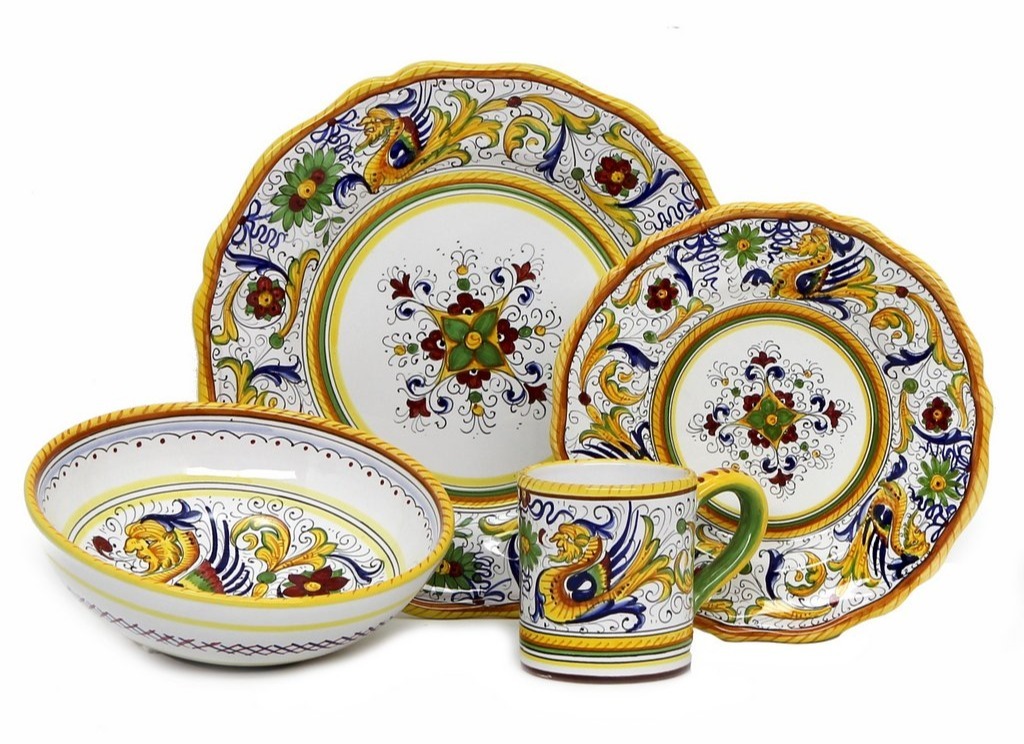
SHOP For RAFFAELLESCO ITALIAN DERUTA CERAMICS
Newest Guide & Blog Updates

Nicchio is the Palio di Siena Winner!! – August 18, 2026
The Nobile Contrada del Nicchio has won the Palio di Siena Horse Race of August 18, 2026 with Jockey...

What Is Italian Espresso? The Coffee, the History & the Perfect Roast
When shopping for coffee beans for my espresso machine, I am often confused. I always buy “Espresso...
Deruta Pottery: History of Italy's Famous Hand-Painted Ceramics
For centuries, the small Umbrian hill town of Deruta, Italy, has been celebrated for producing some...
Palio di Siena Winners: Complete List of Past Winners & Contrade
First held in 1656, The Palio di Siena, otherwise known as "Il Palio", is one of the oldest and most...
Palio di Siena - The Winner of the July 2, 2026 is Aquila
The Nobile Contrada dell'Aquila (Aquila) won the Palio di Siena Horse Race July 2, 2026, which took...
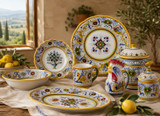
History of the Raffaellesco Deruta Pattern
The Raffaellesco pattern, renowned for its central motif of the benevolent dragon, surrounded by int...