
How to Identify Authentic Italian Pottery: 7 Signs to Look For
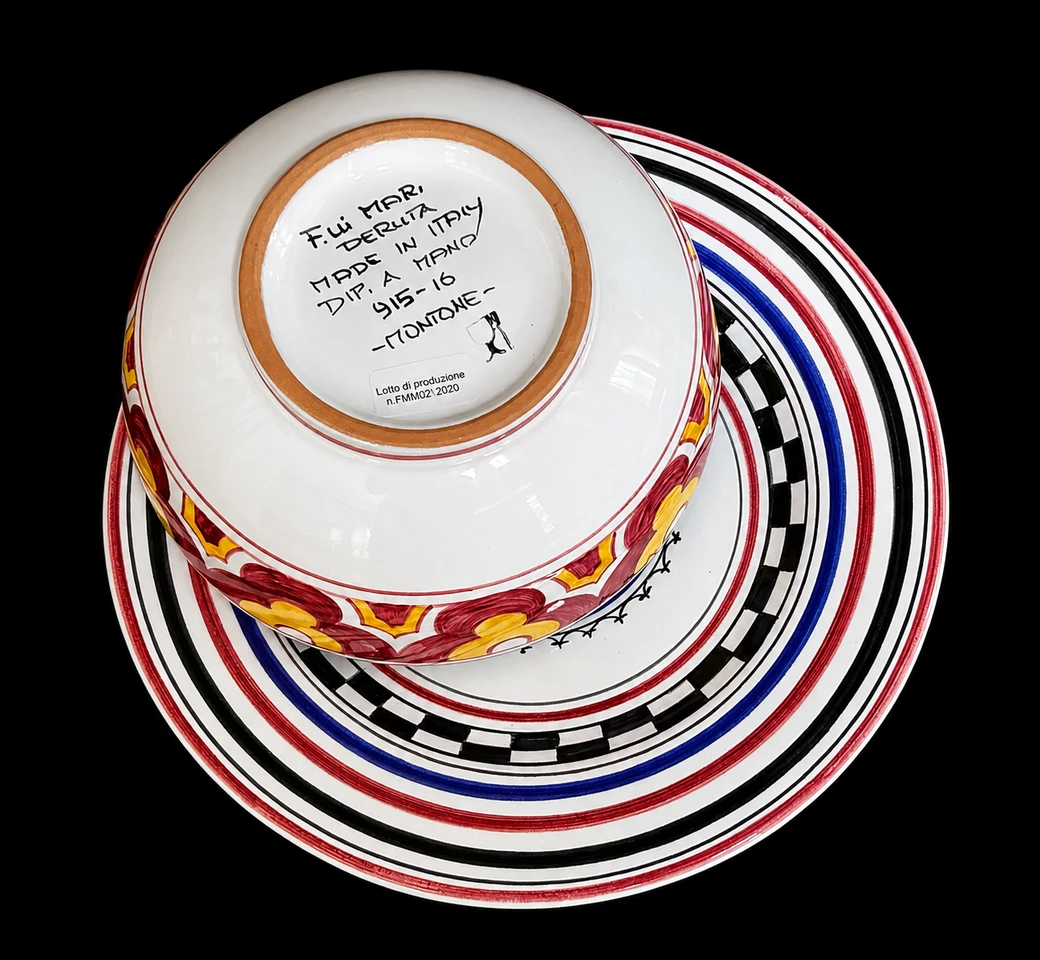
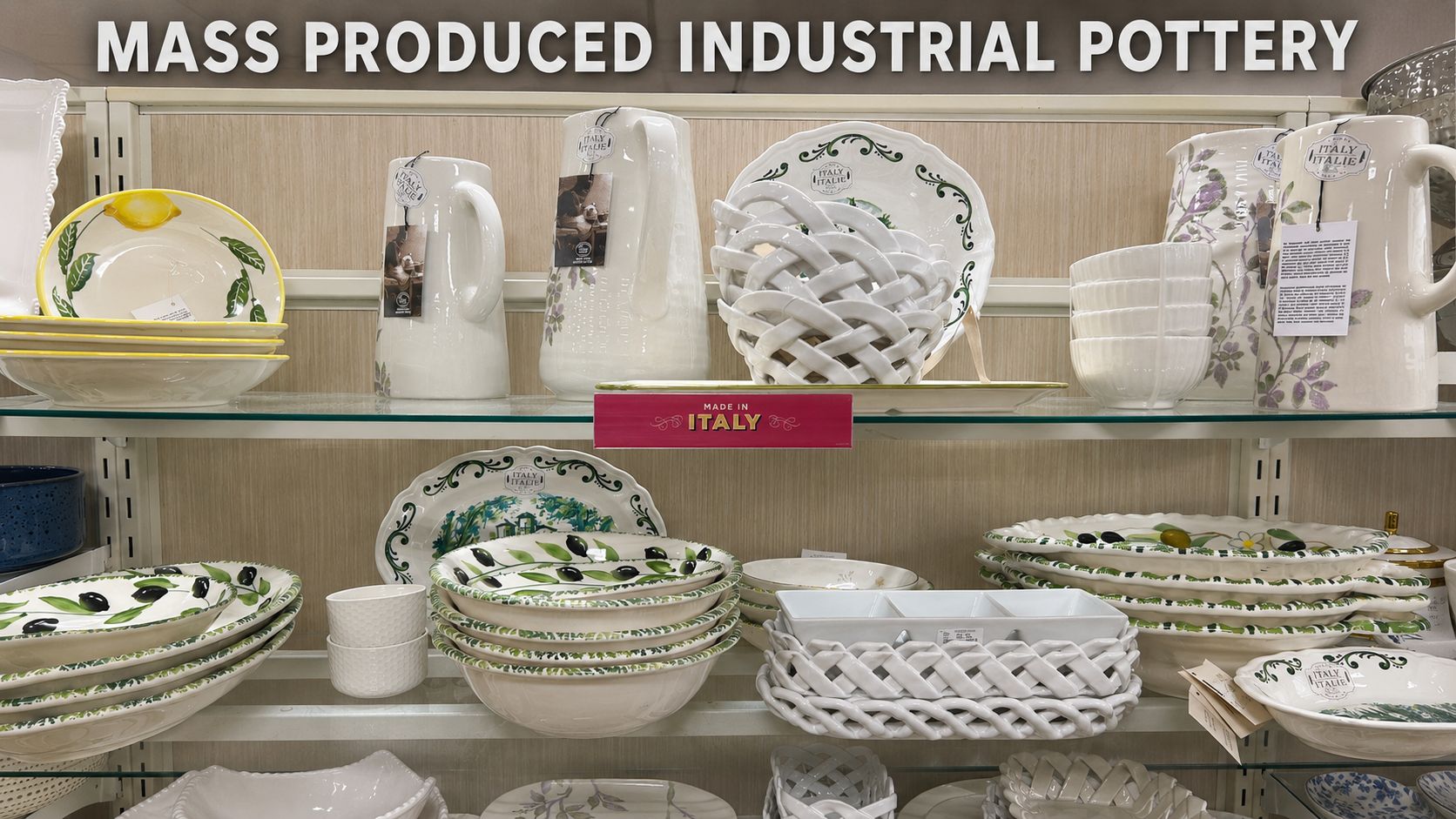
I don't know about you, but I love discovering Italian ceramics—whether I'm wandering through a pottery workshop in Italy, shopping at an antique store, or even browsing the shelves at HomeGoods. But when a colorful Italian ceramic plate or bowl is marked "Made in Italy," how can you tell whether you've found a piece of authentic, handcrafted Italian pottery or something that was mass-produced?
After importing handcrafted Italian ceramics for Merchant of Prato since 2007, I have learned that there isn't one single test that tells the whole story. Instead, there are several clues to look for: the markings on the bottom, visible brushwork, variations in the decoration, the glaze and foot of the piece, the workshop or town of origin, and—perhaps most importantly—the evidence of the human hand.
Here are seven things I recommend looking for.
-
Look at the Markings on the Bottom
One of the first things I do when examining a piece of Italian pottery is turn it over.
Look for markings such as:
- Made in Italy
- Italy
- The town or region where the pottery was produced, such as Deruta
- The name or initials of the ceramic workshop
- Dipinto a mano, meaning "painted by hand"
- Pattern, shape, artist or production numbers
On handcrafted pieces, these markings are often painted or written by hand rather than appearing as a perfectly uniform factory label.
However, a "Made in Italy" mark by itself does not necessarily mean that a piece was handmade or hand-painted. It establishes Italian origin, but you should examine the rest of the piece for evidence of artisan production.
Likewise, the absence of a particular phrase does not automatically make a piece inauthentic. Marking practices differ among workshops and have changed over time.
TIP: If you find an Italian ceramic and don't recognize the markings, photograph the entire bottom of the piece. The workshop name, town, pattern name and even seemingly meaningless numbers can provide useful clues.
-
Look for Evidence That the Decoration Was Painted by Hand
This is one of my favorite things about authentic Italian pottery.
Look closely at the decoration.
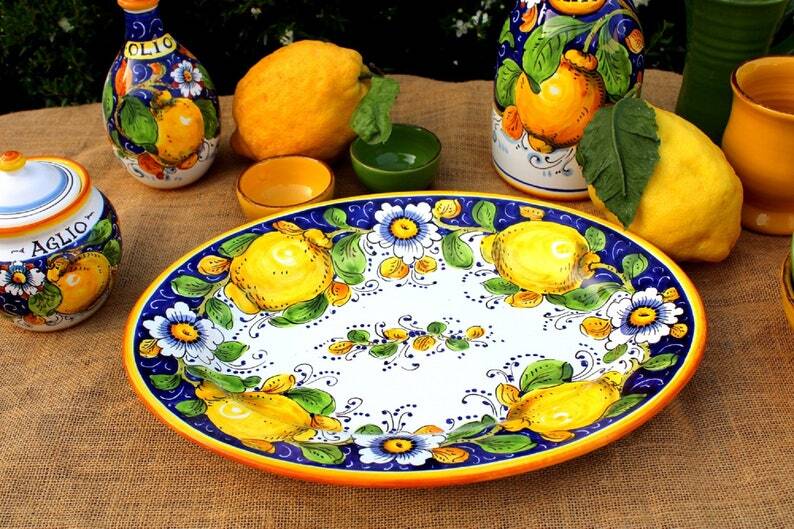
On a hand-painted piece, you may be able to see individual brushstrokes. A line may be slightly thicker in one place than another. The painter's pressure and movement can sometimes be seen in a leaf, flower, border or flourish.
Compare two pieces from the same collection and you'll often discover subtle differences.
A flower may lean slightly differently.
A border may vary a little in width.
A brushstroke may end in a different place.
One painter may use slightly more blue or green than another.
These differences are part of the beauty of handcrafted Italian ceramics. You are not buying something designed to be perfectly identical to the next piece. You are buying the work of an individual artisan.
-
Expect Small Variations—Not Machine-Like Perfection
Handcrafted pottery has personality.
Slight variations in shape, painting, glaze and finish are normal when ceramics are made and decorated by hand.
You might notice:
- A tiny dimple in the clay
- A slightly irregular edge
- Variations in painted borders
- Minor differences in color intensity
- Small glaze irregularities
- Evidence of individual brushstrokes
- Slight differences between two supposedly identical pieces
These characteristics should not automatically be viewed as defects.
In many cases, they are reminders that human hands—not an automated production line—were involved in creating the piece.
There is, of course, an important distinction between handmade variation and actual damage. Cracks, significant chips and structural problems are different from the small irregularities associated with artisan production.
-
Examine the Glaze and the Foot of the Piece
Turn the piece over again and examine the area where the pottery rested during firing.
Traditional Italian maiolica is often made from earthenware that has been coated with an opaque glaze before being decorated and fired. On many pieces, part of the foot or base remains unglazed, allowing you to see the underlying fired clay.
Depending upon the clay and workshop, this exposed area may appear warm buff, tan, reddish or terracotta in color.
The glazed surface itself may also have subtle variations that distinguish it from a completely uniform industrial finish.
But use this clue together with the others.
Italian ceramic traditions vary by region, period and workshop, so the appearance of the base alone should not be used as an absolute test of authenticity.
-
Find Out Where—and by Whom—the Pottery Was Made
"Italian pottery" encompasses centuries of ceramic traditions from many parts of Italy.
Whenever possible, identify the workshop and place of production.
Deruta, in Umbria, is especially famous for its tradition of maiolica. Other important Italian ceramic centers include Faenza, Castelli, Montelupo Fiorentino and numerous towns and workshops throughout the country.
At Merchant of Prato, we seek out ceramics from Italian workshops where artisans continue traditional methods of ceramic production and hand decoration.
Knowing who made a piece—and where it was made—is far more informative than simply seeing the word "Italy" on the bottom.
This provenance is also part of what makes authentic Italian ceramics so interesting to collect. You are purchasing not simply a bowl, plate or vase, but an object connected to a particular place and artistic tradition.
-
Understand the Difference Between Artisan and Mass-Produced Italian Pottery
Not everything made in Italy is made the same way.
Mass-produced ceramics are designed to produce large quantities of highly consistent products efficiently. Modern manufacturing methods can produce attractive Italian tableware, but that is very different from traditional artisan pottery.
Handcrafted Italian ceramics are generally produced in much smaller quantities.
Depending upon the workshop and the piece, production can involve forming or casting the clay, drying it, an initial firing, glazing, hand decoration and another firing. Some especially elaborate pieces require many hours of painting alone.
That difference in production helps explain something customers often ask me:
-
Why Is Authentic Handcrafted Italian Pottery More Expensive?
When you watch an Italian ceramic artisan work, the price of handcrafted pottery begins to make much more sense.
You are paying for far more than clay and glaze.
You are paying for:
- The artisan's time
- Skilled hand-painting
- Multiple stages of production and firing
- The knowledge required to work successfully with clay and glaze
- Small-scale workshop production
- Traditional designs and techniques
- Generations of ceramic knowledge
Some intricate pieces can take hours just to decorate. The complete production process can extend over several days as a piece moves through forming, drying, glazing, painting and firing.
And there is always risk.
Ceramics can crack, glaze can behave unexpectedly, and pieces can be lost during production or firing.
That is very different from an automated factory producing thousands of nearly identical pieces.
What Does "Dipinto a Mano" Mean on Italian Pottery?
Dipinto a mano means "painted by hand."
You'll sometimes find this phrase on the bottom of Italian ceramics, frequently accompanied by the workshop name, town, "Made in Italy," or identifying numbers.
It is a particularly useful marking when evaluating hand-painted ceramics, although—as with any marking—I recommend considering it along with the physical characteristics and provenance of the piece.
What Do the Numbers on Italian Pottery Mean?
Numbers painted on the bottom of Italian ceramics can be confusing.
They don't necessarily indicate the age of the piece.
Depending upon the workshop, numbers may identify a shape, mold, pattern, decoration, size, artist or other internal production information.
Because every workshop has its own system, don't assume that a number is a date or valuable serial number without researching the particular maker.
What Makes Deruta Pottery Special?
Deruta, a hill town in Umbria, has been associated with ceramic production for centuries and became particularly celebrated for its maiolica.
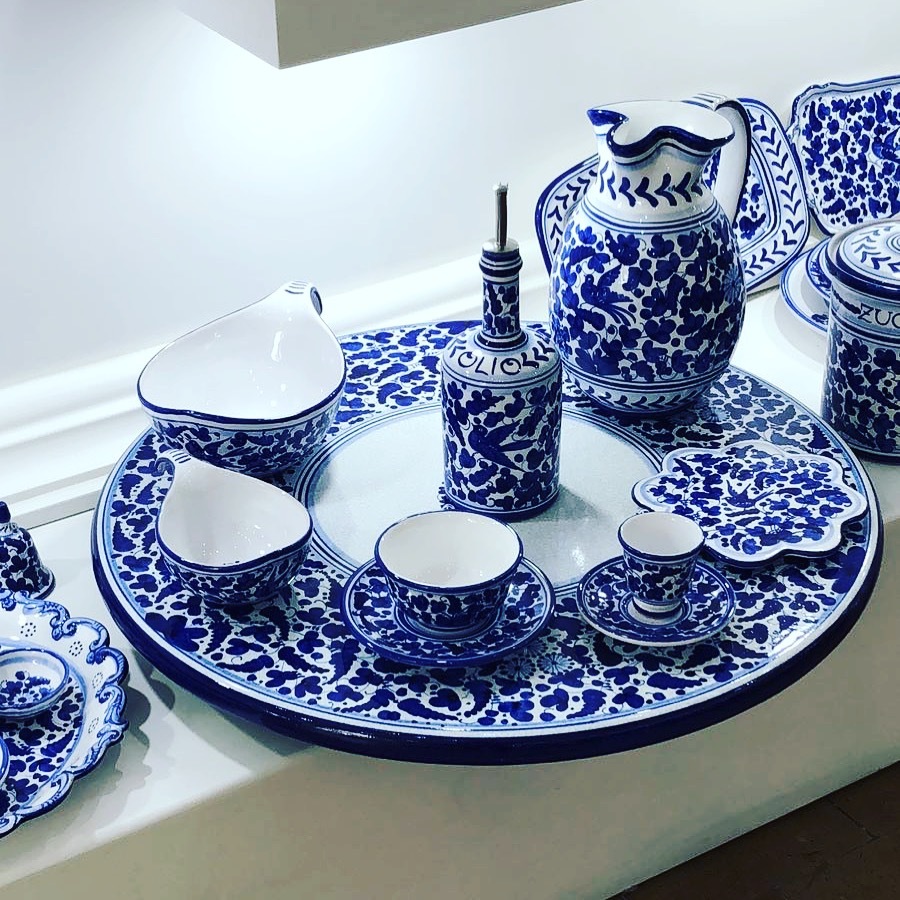
Traditional Deruta pottery is known for elaborate hand-painted decoration and recognizable designs that have developed over generations.
Among the best-known patterns associated with Deruta are Raffaellesco and Ricco Deruta, both of which remain popular with collectors and admirers of Italian ceramics today.
If you are beginning a collection of authentic Italian pottery, learning about the individual workshops and traditional patterns of Deruta is a wonderful place to start.
A Quick Checklist for Identifying Handcrafted Italian Pottery
When I evaluate a piece, I look at the whole object rather than relying on a single characteristic.
Ask yourself:
Where was it made?
Look for Italy, a town such as Deruta, or another place of origin.
Who made it?
Look for a workshop name, signature or identifying mark.
Does it say "dipinto a mano"?
This indicates that the decoration was painted by hand.
Can I see brushwork?
Examine the decoration closely for evidence of hand painting.
Are there natural variations?
Compare similar pieces and look for small differences.
What does the base look like?
The foot, exposed clay and glaze can provide additional clues.
Buy the Story, Not Just the Pottery
For me, the appeal of authentic Italian pottery has always gone far beyond its beauty.
Each piece connects us to the artisan who painted it, the workshop where it was produced and the Italian ceramic tradition from which its design emerged.
That is one reason I founded Merchant of Prato and have been importing Italian ceramics since 2007. I wanted to make these wonderful pieces—and the stories behind them—available to people who share my love of Italy and Italian craftsmanship.
When choosing Italian pottery, don't look for perfection, look for imperfection. To err is to be human. If the piece is too perfect, chances are it was made by a machine and not human hands. .
Look for the brushstroke.
Look for the artist's hand.
Look for the workshop.
Look for the place where it was made.
Those little details are often what make handcrafted Italian ceramics so special.
Frequently Asked Questions About Authentic Italian Pottery
How can you tell if Italian pottery is authentic?
Start by examining the markings, workshop or place of origin, hand-painted decoration, glaze, exposed clay and natural variations between pieces. A "Made in Italy" mark can establish Italian origin, but it should not be the only factor used to determine whether pottery was handcrafted.
Does "Made in Italy" mean pottery is handmade?
No. "Made in Italy" indicates Italian origin, but it does not by itself prove that a ceramic was handmade or hand-painted. Look for additional evidence such as hand-painted brushwork, workshop markings, "dipinto a mano," and information about how and where the piece was produced.
What does "dipinto a mano" mean?
"Dipinto a mano" means "painted by hand" in Italian. It is commonly found on hand-painted Italian ceramics.
Are imperfections normal in handmade Italian pottery?
Small variations in shape, painting, glaze and finish can be normal characteristics of handcrafted ceramics. They are different from significant cracks, chips or structural damage.
Is all Deruta pottery handmade?
The word "Deruta" refers to the Italian town famous for its ceramic tradition. When purchasing a piece represented as handmade or hand-painted Deruta pottery, look for information identifying the workshop and production method rather than relying solely on the geographic name.
Why is handcrafted Italian pottery expensive?
Handcrafted ceramics require skilled labor and multiple stages of production, which may include forming, drying, firing, glazing, hand-painting and additional firing. Intricate designs can require hours of an artisan's time to paint.
Is Italian pottery collectible?
Yes. Many people collect Italian pottery by workshop, region, artist, pattern or form. Deruta ceramics and traditional designs such as Raffaellesco and Ricco Deruta are particularly recognizable areas of Italian ceramic collecting.
SHOP HANDCRAFTED ITALIAN CERAMICS
Updated: September 3, 2026
Newest Guide & Blog Updates

Nicchio is the Palio di Siena Winner!! – August 18, 2026
The Nobile Contrada del Nicchio has won the Palio di Siena Horse Race of August 18, 2026 with Jockey...

What Is Italian Espresso? The Coffee, the History & the Perfect Roast
When shopping for coffee beans for my espresso machine, I am often confused. I always buy “Espresso...
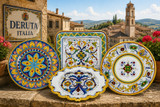
Deruta Pottery: History of Italy's Famous Hand-Painted Ceramics
For centuries, the small Umbrian hill town of Deruta, Italy, has been celebrated for producing some...
Palio di Siena Winners: Complete List of Past Winners & Contrade
First held in 1656, The Palio di Siena, otherwise known as "Il Palio", is one of the oldest and most...

Palio di Siena - The Winner of the July 2, 2026 is Aquila
The Nobile Contrada dell'Aquila (Aquila) won the Palio di Siena Horse Race July 2, 2026, which took...
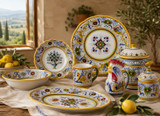
History of the Raffaellesco Deruta Pattern
The Raffaellesco pattern, renowned for its central motif of the benevolent dragon, surrounded by int...