
Church of San Donato (Chiesa di San Donato) in Castelli, Italy - "The Sistine Chapel of Majolica"

The Italian town of Castelli, is renowned for its ancient and precious tradition of ceramic art. Residing in this small town is The Church of San Donato (Chiesa di San Donato), nicknamed the "The Sistine Chapel of Majolica".
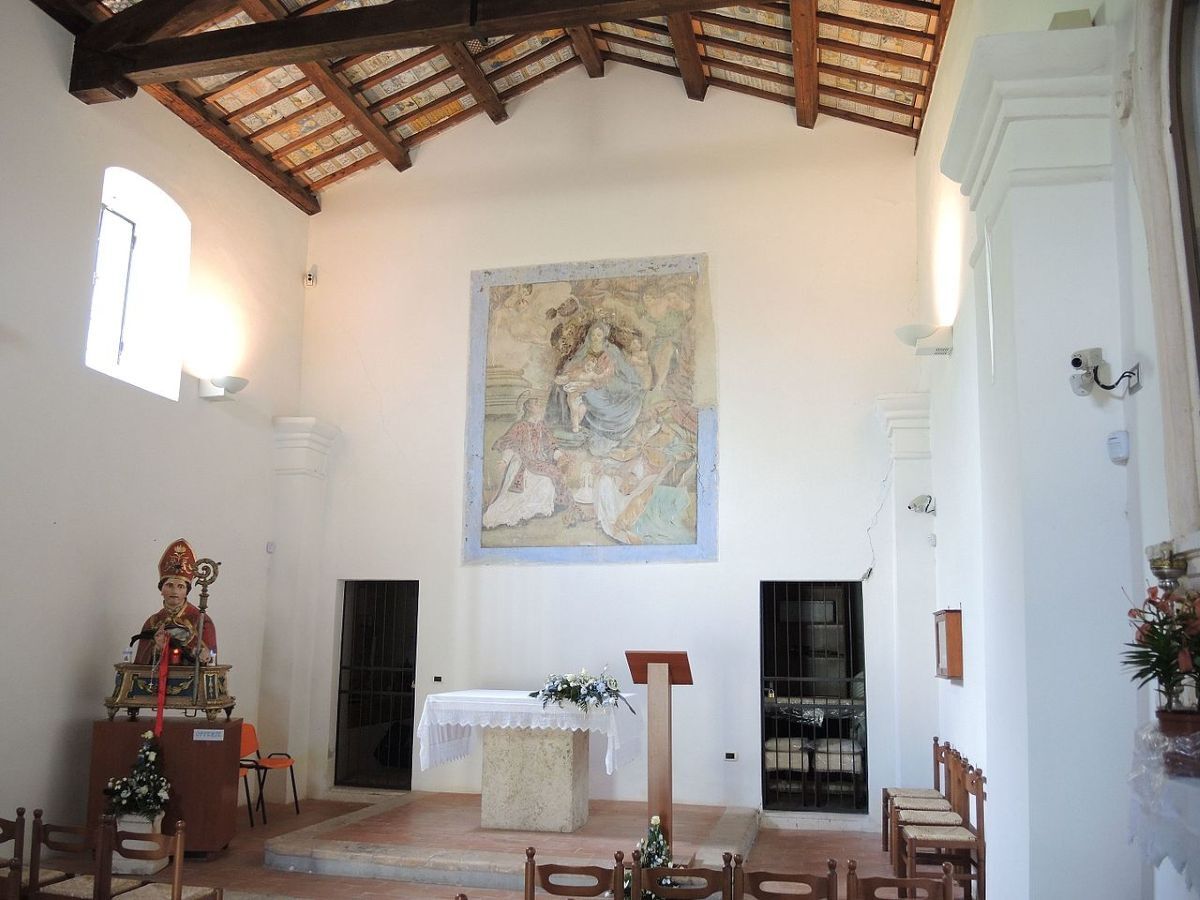
The Church of San Donato in Castelli is rather plain with an anonymous exterior, typical of Italian country parish churches. It contains a single nave, preceded by a low portico. But don't let this simple interior disappoint you. Look up to the heavens and be amazed by an original majolica ceiling of dazzling beauty. The sloping trusses are divided into compartments where over eight hundred majolica tiles decorated in shades of yellow, orange, green and blue coming from the palette of the artists of Castelli, sit sandwiched by beams. The approximately 800 bricks which comprise the ceiling, were created in 1615, 1616, ans 1617 and depict geometrico motifs, coats of arms and heraldic emblems, floral ornaments and decorations, animals and above all religious figures, symbols and inscriptions.
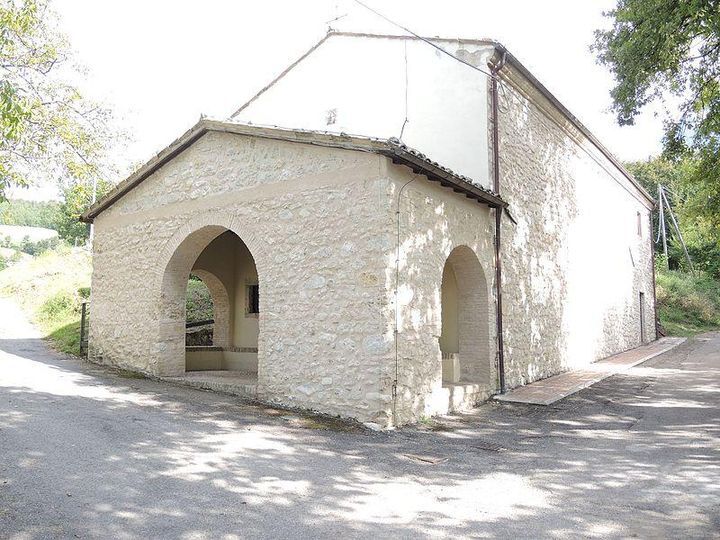
Very little is known about the Church of San Donato. Legend says that in the 15th century a shrine dedicated to the Madonna del Rosario was built here, which contained a decorated brick ceiling. Started as a country church by the Orsini family and assigned to a Benedictine friar, San Donato with its little porch attached to the front probably originally served as a haven to give hospitality to area shepherds. At the beginning of the 17th Century, the church was enlarged and decorated. In 1615-1617, a new ceiling was installed replacing the older one. The bricks are made of majolica, a porous paste covered with hot-solidified enamel and decorated with religious images alternate with invocations, geometric motifs, and male and female figures.
The original ceiling of San Donato, which dates back to the 16th century and is attributed to the workshop of Orazio Pompei, was removed and reused as the floor of the altar of San Donato during the renovations.
Orazio Pompei was the master artist in Castelli during the 16th Century and his works are held in the collections of the Metropolitan Museum of Art in New York City and The British Museum in London.
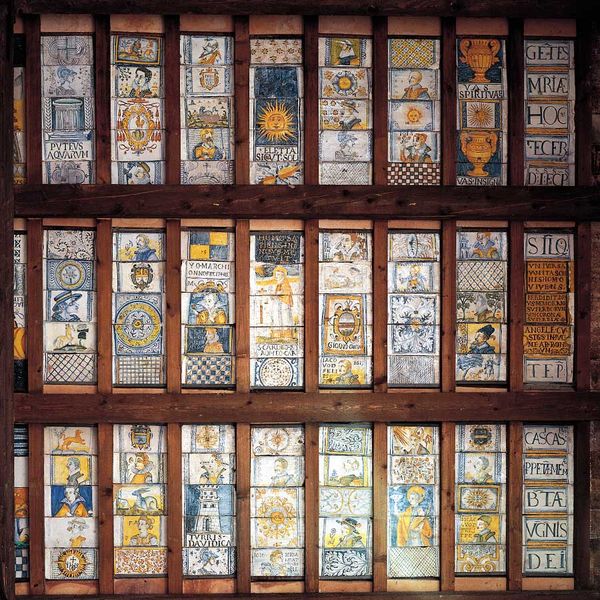
Looking up at the first section of the San Donato ceiling, one is introduced by the words of the Magnificat: “exultavit spiritus meus in Deo salutari meo quia respexit humilitatem ancillae suae” (My spirit rejoices in God my Savior, because he has looked with favor on the lowliness of his handmaid.), accompanied by the text of the Lord’s Prayer and the verse of the Matins: “Domine, labia mea aperies” (Lord, open my lips). Looking down upon us are some of the most popular saints: Saint Anthony of Padua, Saint Lawrence, the Madonna and Child as well as the faces of nobles and artisans (including an Antonio Mercurio, dated 1615) alternate with images of animals and elaborate geometries.
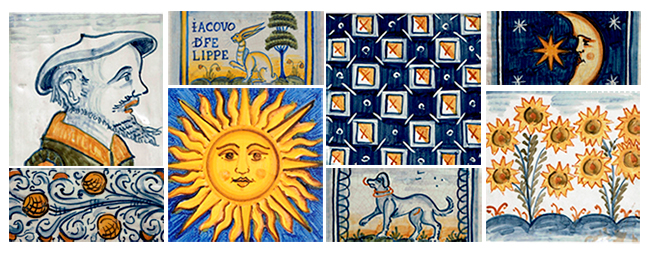
Other areas of the ceiling contains “selfies” of numerous ceramists from Castellana who wanted to pass on to posterity their faces and their autographs immortalized in majolica. Among the other saints, a large San Carlo Borromeo stands out. There are many geometric virtuosities (the King Solomon knot stands out), coats of arms, arabesques and rosettes. And then there is a widespread Marian devotion that translates into the images of traditional invocations and litanies: Sedes sapientiae, Puteus aquarum, Domus aurea, Eletta sicut soli, Turris davidica, Vas spiritualis, Vas insignae devotionis…
During the 19th century, the 16th century floor of the altar was dismantled and was then preserved in the town hall of Castelli until it was placed in the Museum of Ceramics where it can still be admired today.
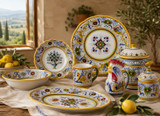
Reproductions of these exquisite tiles which are still hand-painted in Castelli, Italy are available through Merchant of Prato.
Newest Guide & Blog Updates
Nicchio is the Palio di Siena Winner!! – August 18, 2026
The Nobile Contrada del Nicchio has won the Palio di Siena Horse Race of August 18, 2026 with Jockey...

What Is Italian Espresso? The Coffee, the History & the Perfect Roast
When shopping for coffee beans for my espresso machine, I am often confused. I always buy “Espresso...
Deruta Pottery: History of Italy's Famous Hand-Painted Ceramics
For centuries, the small Umbrian hill town of Deruta, Italy, has been celebrated for producing some...
Palio di Siena Winners: Complete List of Past Winners & Contrade
First held in 1656, The Palio di Siena, otherwise known as "Il Palio", is one of the oldest and most...
Palio di Siena - The Winner of the July 2, 2026 is Aquila
The Nobile Contrada dell'Aquila (Aquila) won the Palio di Siena Horse Race July 2, 2026, which took...
History of the Raffaellesco Deruta Pattern
The Raffaellesco pattern, renowned for its central motif of the benevolent dragon, surrounded by int...