
How to Care for Italian Pottery & Ceramics | Complete Guide
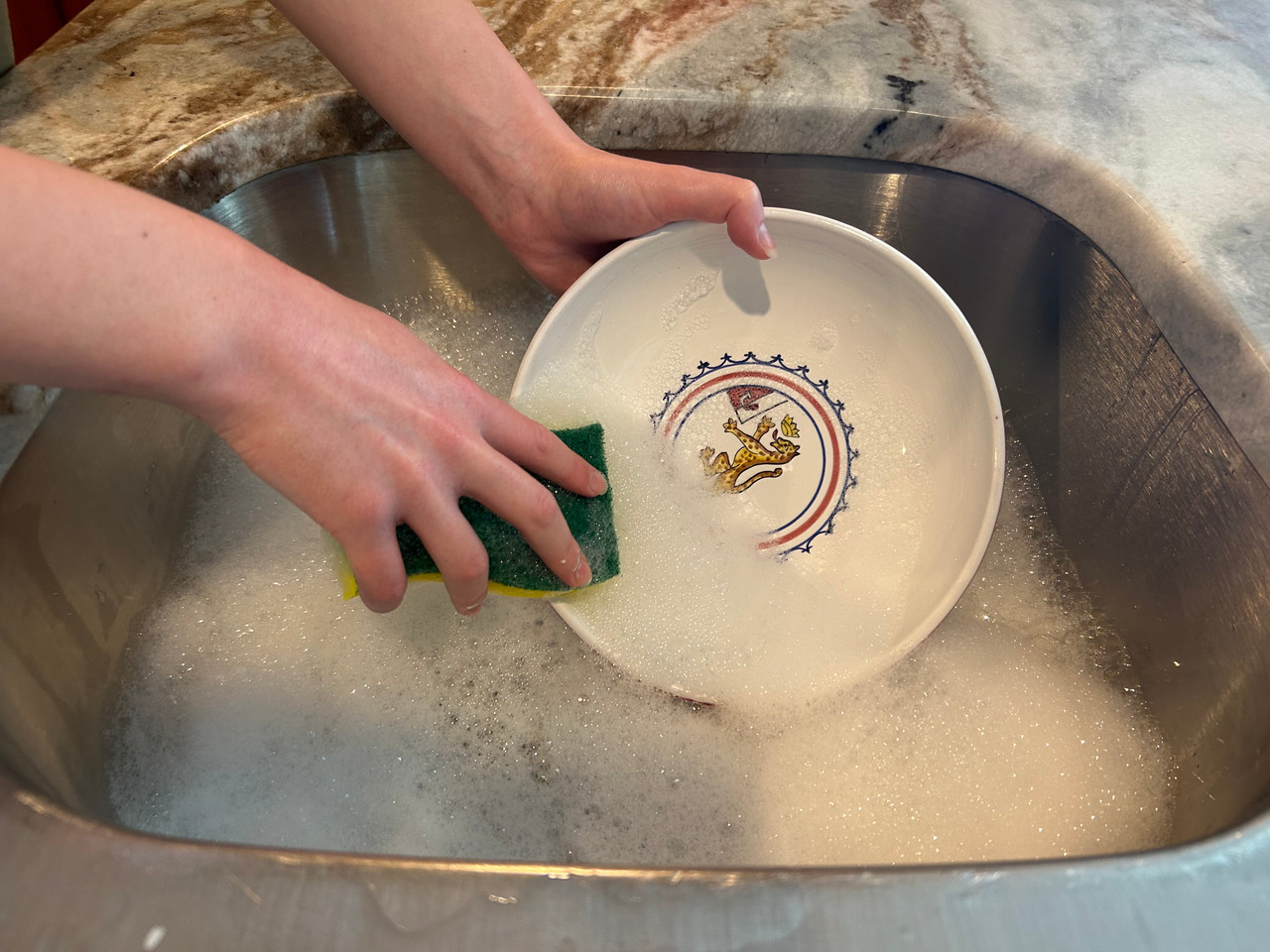
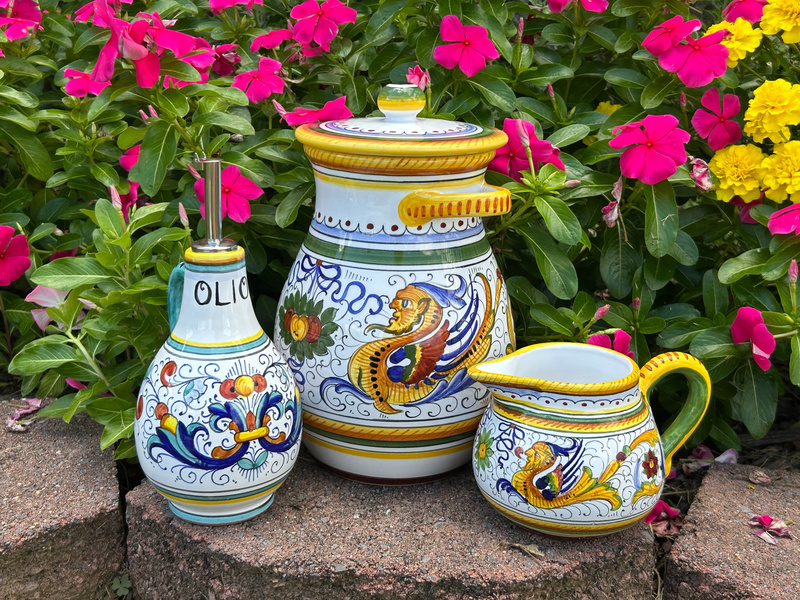
Hand-painted Italian pottery is made to be enjoyed, but proper care can help preserve its beautiful colors and glazed finish for many years. Traditional Italian ceramics, including Deruta pottery and other Italian maiolica, are generally made from earthenware and require slightly different care than porcelain or stoneware.
Can Italian pottery go in the dishwasher? Can it be used in the microwave? What causes crazing? And how should you remove coffee or food stains without damaging the glaze?
In this guide, we'll explain how to clean, use and care for your Italian ceramics so you can enjoy them for years to come.
Are Italian Ceramics Food Safe?
All our Italian Ceramic Dinnerware and Tabletop Products are guaranteed to be 100% Food Safe.
Our manufactures do NOT use any glaze or color pigment with lead content in our dinnerware and tabletop products, and these products comply with FDA Regulations.
How to Care for Hand-Painted Italian Pottery
Can Italian Pottery Go in the Oven?
Our Italian dinnerware products are manufactured to be used as "Serving" pieces and not cookware and therefore are not suitable for stove or conventional oven use.
Can Italian Pottery Go in the Microwave?
The ceramics can be used in microwave oven for moderate reheating only.
NOTE: These Italian ceramics may become very hot. As the temperature of certain items may vary after microwave use, we recommend to carefully handle any piece.
Always follow the care instructions provided for your particular piece or collection. Unless otherwise indicated, our Italian ceramics are designed primarily as dinnerware and serving pieces rather than cookware. Some pieces may be suitable for moderate microwave reheating; however, repeated microwave use and rapid temperature changes may contribute to crazing of the glaze.
Is Italian Pottery Dishwasher Safe?
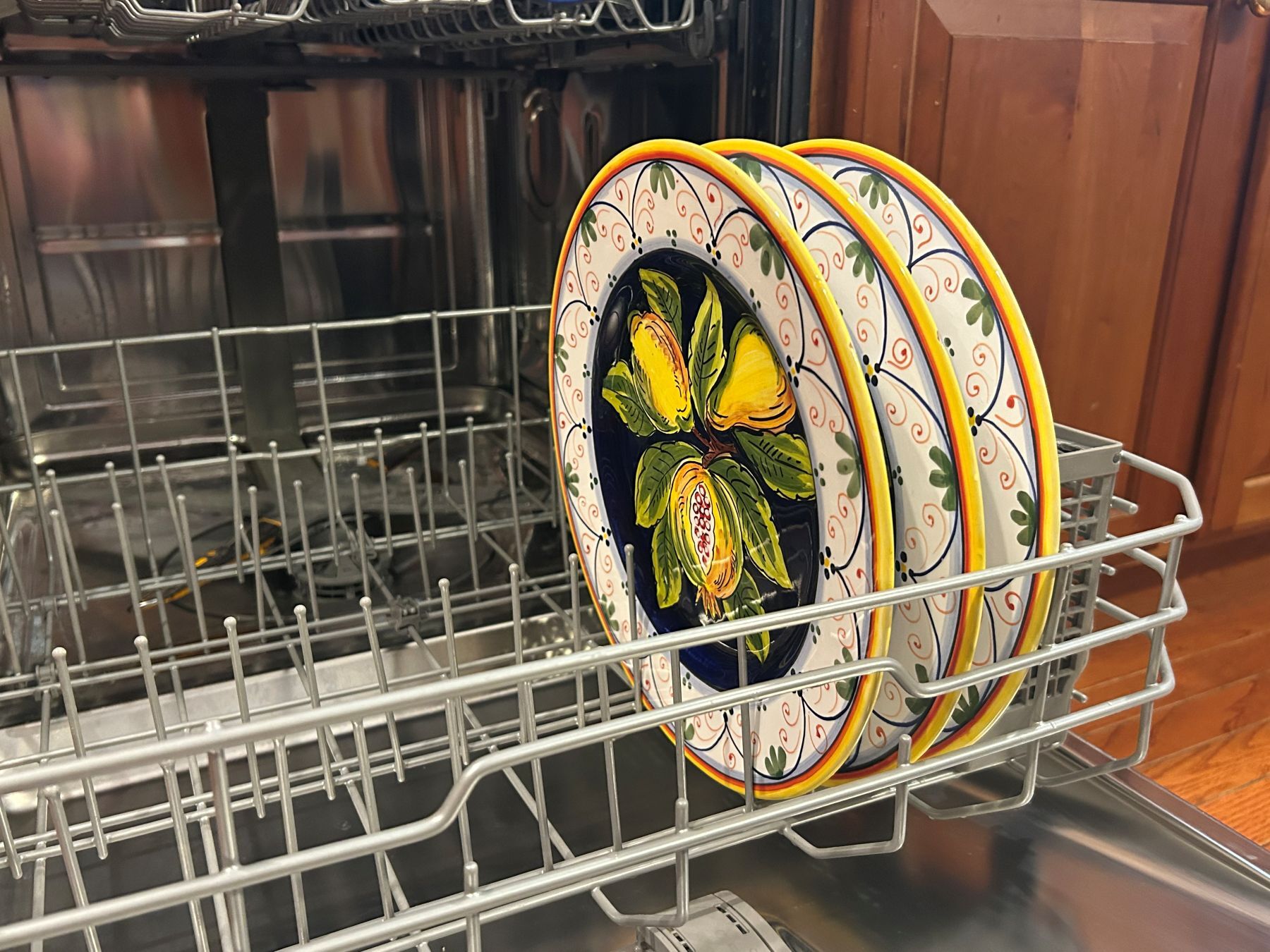
Our Italian ceramic dinnerware, mugs and any tabletop products are electric dishwasher safe, unless otherwise noted. However, for the longevity of your piece we recommend hand washing. If utilizing the dishwasher, it is recommended to place the ceramics far apart to avoid touching each other during the high-pressure dishwashing.
How to Remove Coffee, Tea and Food Stains
For tough stains, never use scouring powders or harsh scourers as they will damage the glaze. For easy cleanup, fill sink with soapy water, let it soak, for a few moments, and use a plastic scrubber to remove grime.
To remove tea & coffee stains in cups & mugs, mix a solution of 2 tablespoons chlorine bleach per quart of water; soak 1-2 minutes; rinse promptly.
How to Prevent Thermal Shock and Cracking
Earthenware by nature is sensitive to extreme temperatures such as boiling or freezing liquids, therefore pour hot liquids into your plates or cups, slowly to avoid sudden temperature changes that may crack your ceramic piece.
What Is Crazing in Italian Pottery?
With repeated use or with temperature and humidity change, earthenware ceramics have a tendency to "craze" (forming minuscule hairline cracks in the glazing).
The crazing is the nature of earthenware, and has no significant effect on the ceramics, and sometimes it is a much sought after effect.
Crazing may appear several days or even years after production and is caused by the thermal expansions of glaze and ceramic body that expand slightly on heating and contract on cooling as the glaze "stretches" on the ware and cracks.
If you notice very fine hairline lines appearing beneath the glazed surface of your Italian pottery, the piece may be experiencing crazing.
Crazing occurs when tiny cracks develop in the glaze as the ceramic body and glaze expand and contract at slightly different rates. It is particularly associated with glazed earthenware and may develop gradually with age, use or repeated temperature changes.
Crazing should not be confused with a crack through the ceramic body itself. Avoiding sudden temperature changes can help reduce stress on your pottery.
How to Care for Italian Ceramic Planters
Our authentic Home & Garden Deruta and Tuscan pottery products, such as planters, cachepots, and jardinières, are suitable for outdoor use.
HEAT: The hand-painted designs, colors, and glazing are guaranteed to remain unchanged under any conditions, including extreme heat and continuous exposure to sunlight.
COLD: These vases are "cold" resistant, but they will not withstand "freezing" temperatures!
In severe winter areas where temperatures drop below 32 degrees Fahrenheit, these vases MUST be brought indoors to prevent glaze damage and clay cracking.
How to Care for Italian Ceramic Tiles
Our Italian ceramic decorative tiles are suitable for indoor and outdoor use.
The tiles are NOT suitable for flooring.
The San Donato Tiles and Mattonelle are NOT recommended for bathroom shower or tub areas or pools due to their more porous nature.
HEAT: The hand-painted designs, colors, and glazing are guaranteed to remain unchanged under any conditions, including extreme heat and continuous exposure to sunlight.
COLD: These tiles are "cold" resistant, but they will not withstand "freezing" temperatures! We DO NOT recommend outdoor use in climates where the temperatures drop below 32 degrees Fahrenheit. These cold temperatures will cause glaze damage and clay cracking.
SHOP OUR COLLECTION OF ITALIAN CERAMICS
Newest Guide & Blog Updates

Nicchio is the Palio di Siena Winner!! – August 18, 2026
The Nobile Contrada del Nicchio has won the Palio di Siena Horse Race of August 18, 2026 with Jockey...

What Is Italian Espresso? The Coffee, the History & the Perfect Roast
When shopping for coffee beans for my espresso machine, I am often confused. I always buy “Espresso...
Deruta Pottery: History of Italy's Famous Hand-Painted Ceramics
For centuries, the small Umbrian hill town of Deruta, Italy, has been celebrated for producing some...
Palio di Siena Winners: Complete List of Past Winners & Contrade
First held in 1656, The Palio di Siena, otherwise known as "Il Palio", is one of the oldest and most...

Palio di Siena - The Winner of the July 2, 2026 is Aquila
The Nobile Contrada dell'Aquila (Aquila) won the Palio di Siena Horse Race July 2, 2026, which took...
History of the Raffaellesco Deruta Pattern
The Raffaellesco pattern, renowned for its central motif of the benevolent dragon, surrounded by int...